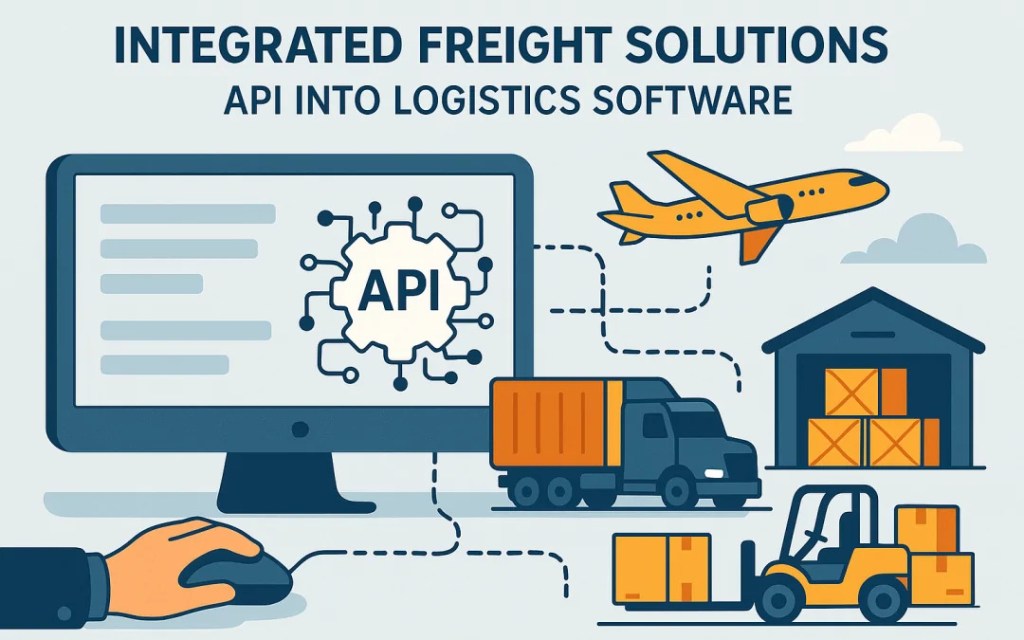
Shipping has become a major activity in the business world. The number of orders keeps increasing, and customers want their products to be delivered to them quicker and from more locations than before. A good system cannot handle an increase in demand from 500 shipments to 50. Manual procedures are unable to match the pace. Spreadsheets are unable to perform. Tools that are not connected create delays in the process. Companies are looking for solutions that can expand with them rather than put them in a difficult position. The solution lies in how different software components connect and interact with one another.
What Is Shipping API Integration?
Shipping API integration connects your company’s business systems to shipping carriers via code. APIs are like translators, enabling different software to communicate in a common language. With API integration, the platform could retrieve shipping rates, generate labels, and automatically monitor parcels without requiring staff to log in to the courier website. The information is exchanged both ways without delay. Your system transmits shipment details to carriers. The carriers, in turn, relay tracking updates and delivery confirmations to you. All of these happen automatically in the background.
Why APIs Are Important for the Growth of Logistics
Core Benefits
APIs address specific issues that become more pronounced as your operations scale.
- Rate selection and label generation are done in seconds, not minutes
- Data entry is completely automated, resulting in little or no errors
- Constant shipment visibility makes automatic informing of all parties involved
- Integration of new carriers is an easy task, instead of being tied to the existing complicated workflow
All of these increase as the number of orders rises. The advantage of saving two minutes per shipment is as few as 10 orders per day. However, for 1,000 orders per day, that would mean 33 hours of saving. On the other hand, these benefits are only applicable if your main system is prepared to grow.
Preparing Your Logistics Management Software for Scaling
Logistics management software requires a proper setup before the APIs can work. It is similar to constructing a house; You would need a strong foundation before adding the rooms. The system should be designed so that modules can be added or removed independently. There must be a smooth flow of data between different parts without blockage or duplication. Quick fixes might help to survive daily problems, but they will create even larger ones in the future. Start with the mindset of flexibility. This implies opting for platforms that are already designed to continue growing, rather than ones that are just about to grow and are already barely meeting current needs.
Best practices for shipping API integration
Implementation essentials
The right way to integrate APIs is to follow steps that have proven to work.
- Prioritize your most significant shipping processes and then advance
- Test everything exhaustively in a non-production environment before going live
- Monitor API performance all the time to detect issues at an early stage
- Restrict customizations to the least possible to steer clear of maintenance difficulties
Small beginnings are logical. First, perfect one integration, then add more complexity. During testing, keep systems running in parallel so that nothing breaks. Watch how quickly APIs are responding and how often they are failing. Simple configurations are less complicated to fix and more likely to be updated later.
If you are handling orders through different sales channels, the question of the significance of shipping API integration in multi-channel order management software would become more pertinent to you.
Common Scaling Mistakes to Avoid
Avoidable mistakes warp many businesses’ growth. Adding complexity before reaching stability creates disarray. Systems must be reliable at the present volume before they can be expanded. Failure to consider API updates leads to the breakdown of integrations. Airlines frequently modify their systems. If integrations are considered as one-time projects, then they are bound to fail at some point. APIs require constant monitoring and support. Making technical decisions without growth goals in mind is unproductive, as it takes both time and resources.
How ShipGenius Enables API-Driven Growth
ShipGenius has created its platform with businesses that demand to scale in mind. Their developer-friendly APIs connect to different carriers through a single integration, rather than building separate links for each. From a single access point, the system deals with USPS, UPS, FedEx, and DHL Express. The GraphQL API enables developers to retrieve the precise data they need without unnecessary complexity. It is built to accommodate volumes ranging from startups to enterprises without requiring platform changes.
Moving Forward With Scalable Logistics
API integration is not just about fancy technology, but scaling logistics. It is about creating systems that work harder as your company grows rather than making your team do more work. The proper way of doing things meets present demands and adds future flexibility. If you are looking to scale your logistics operations, consider ShipGenius’s role in scalable logistics through powerful API capabilities.
FAQs on Scaling Logistics With Shipping APIs
What is the process involved in scaling logistics software?
Scaling logistics software means that a company can handle more shipments, use more carriers, and explore new markets without interruption to existing processes. Your system handles 10 times the amount of work without 10 times the effort.
In what ways do shipping APIs aid in the process of scaling?
APIs automate data exchange between systems, eliminating long-standing manual bottlenecks. They can execute a thousand transactions in the time it takes a person to do one.
Is API-based scaling a privilege reserved for large enterprises?
Not at all. Growing businesses benefit from early API adoption. When you build scalability into your operations from the beginning, you eliminate the need for a later transition.

 Site Title
Leave a comment